
publications
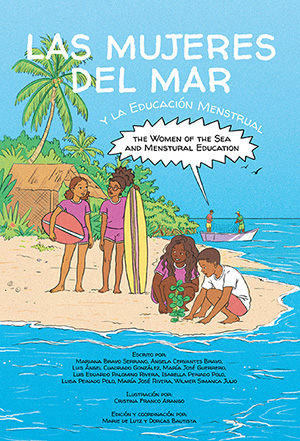
Las Mujeres del Mar y la Educación Menstrual
The Women of the Sea and Menstrual Education
An ethnographic graphic novel written by youth, for youth
Open access available at www.mujeresdelmarnovela.com
Azuleja, María, Regina, and Luis are four youth from a rural coastal community in the Colombian Caribbean, located between the mangroves and the sea. Through a fictional narrative based on real events, we follow these youth as they learn about menstruation in Fundación SinuMar and its girls’ surf club, Mujeres del Mar (Women of the Sea). Combining storytelling and educational materials, The Women of the Sea and Menstrual Education is a menstrual education tool that invites us into a conversation on the relationship between the body, ecosystem, and community as spaces of knowledge.
Azuleja, María, Regina y Luis son cuatro jóvenes de una comunidad rural en la costa caribeña de Colombia, situada entre los manglares y el mar. A través de una historia de ficción basada en hechos reales, sigamos a estos jóvenes mientras aprenden sobre la menstruación en la Fundación SinuMar y su club de surf femenino, Mujeres del Mar. Al combinar la narración de historias con material educativo, Las Mujeres del Mar y la Educación Menstrual es una herramienta de educación mensrual que invita al diálogo sobre la relación entre cuerpo, territorio y comunidad como espacios de conocimiento.
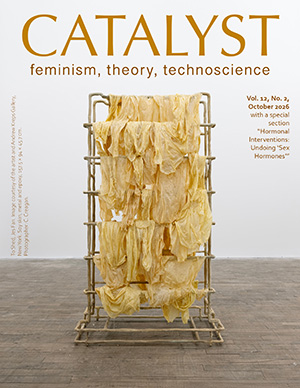
Where Menstrual Education and Environmental Justice Converge: Perspectives from Latin American Decolonial Menstrual Health Education
Available open access in Catalyst: feminism, theory, technoscience
When discussed together, menstrual and socioenvironmental health often focus on questions of hygiene and risk management, centering the materialities, distribution, and disposal of menstrual products. The toxicity of disposable menstrual products has long been a matter of concern, with growing public attention to endocrine disruptors (EDs) accompanying the expansion of a marketplace for “eco-friendly” options. Critical menstrual scholars and activists have addressed the tendency to focus on products in menstrual health interventions as risking the reinforcement of welfarist attitudes and individualizing narratives of responsibility. Critiques of individualizing narratives are echoed in scholarship that conceptualizes EDs as industrial pollutants. In Latin America, a growing menstrual health movement is voicing this critique, while also situating menstruation within broader sociopolitical and environmental concerns. This article draws attention to how territorial framings of menstruation in Latin America are generating dynamic spaces to work with and through the tensions and potentialities of menstrual education and socioenvironmental justice. Examining how EDs are discussed in the menstrual education intervention of a community-based socioenvironmental program in coastal Colombia, the article demonstrates how Latin American decolonial menstrual health education approaches are advancing understandings of menstruation as a situated biopsychoecosocial process through which to address and redress broader structural violences.

Orphaned Landscapes: Violence, Visuality, and Appearance in Indonesia, by Patricia Spyer
Visual editor
Conceptualization of the visual design of the monograph in line with author’s vision. Preparation, editing, and compositing of images (app. 80) for print including color/exposure corrections, image treatment & and layout.

Stirring up Atrocity n°1 - 6
in Paris Lit Up Magazine, Issue 3
Photo essay combining the series ‘Nairobi Roads’ and excerpts from Stirring up Atrocity: Photography and Conflict Transformation in Kenya.